 0
0
 0
0
A program appearing again in a television schedule does not guarantee that viewers can watch it online afterward. A broadcaster may be allowed to air the program on a linear channel while lacking permission to provide the same episode as live online video, catch-up viewing, or full on-demand VOD.
For viewers in Korea, the practical task is to identify which form of access is currently licensed rather than assuming that a TV rerun should automatically create an online replay.

TV Rebroadcasting and Online VOD Use Different Rights
Korean copyright guidance distinguishes broadcasting from on-demand transmission. Broadcasting sends content so that the public receives it at the same time, while transmission makes content available for individual users to access at the time and place they choose. Online VOD falls into the second category. Permission to broadcast a work therefore does not automatically establish permission to provide it as on-demand video.
A television rerun can also require its own rights processing. Permission for the first broadcast does not necessarily include every later rebroadcast, but a broadcaster may have secured television rerun rights without obtaining—or renewing—the separate rights needed for online VOD.
This creates several forms of availability that should be checked separately:
| Access Type | What It Means |
|---|---|
| TV rebroadcast | The program is scheduled again on a linear television channel |
| Online live stream | The channel can be watched live through a website or app |
| Catch-up viewing | The recent broadcast is available online for a limited period |
| Full VOD | The viewer can select and play an episode on demand |
| Clips or highlights | Only selected scenes or shortened videos are available |
A program may be available in one category and blocked in another. MBC’s official schedules, for example, explain that programs marked as unavailable for online on-air viewing can be blocked because of particular rights restrictions, even though the program remains part of the television schedule.
Why a Whole Series or Particular Episode May Be Missing
The missing rights may involve the program as a whole, but the restriction can also apply only to certain episodes.
A variety show, documentary, cultural program, or older drama may contain music, photographs, film clips, archive footage, performances, or material supplied by another producer. Some of those elements may have been cleared for television broadcasting without being cleared for permanent or on-demand internet use.
KBS production guidance notes that music and externally produced audio can require separate rights checks, particularly when the broadcaster cannot confirm that an outside music director or production company secured the necessary permissions.
This helps explain why two episodes from the same program may have different online availability. SBS has official episode pages that remain visible while stating that the specific episode cannot be provided as VOD because of copyright issues.
Other possible explanations include a co-production agreement, an expired digital licence, a time-limited VOD window, distribution rights held by another platform, or a version that requires editing before online release. These are possible explanations, not facts that viewers should assume without an official notice.
The following conclusions should therefore be avoided:
- Several reruns without VOD do not prove that the restriction is permanent.
- Finding the title on another OTT service does not by itself prove an exclusive agreement.
- The availability of short clips does not confirm that the broadcaster has full-episode VOD rights.
- The absence of an explanation does not identify music, performers, or another company as the cause.
Only the broadcaster, rights holder, distributor, or platform can confirm the exact contractual reason.
Full VOD Availability Depends on the Exact Episode and Platform
Start with the exact program name, episode number, and original broadcast date. Searching only the series title may show clips, another season, or an unrelated version.
Use this order:
| Step | Where to Check | What to Confirm |
|---|---|---|
| 1 | Official television schedule | Whether the listing is a rerun and which channel is airing it |
| 2 | Official program page | Whether a replay menu exists for the series |
| 3 | Exact episode page | Full VOD, preview, clip, delayed release, or copyright-unavailable notice |
| 4 | Current Korean OTT and IPTV services | Whether the exact season and episode are offered elsewhere |
| 5 | Broadcaster or platform support | Whether the episode is delayed, unavailable, expired, or supplied through another service |
Do not stop after checking the broadcaster’s homepage. Availability can vary by episode, platform, and release window.
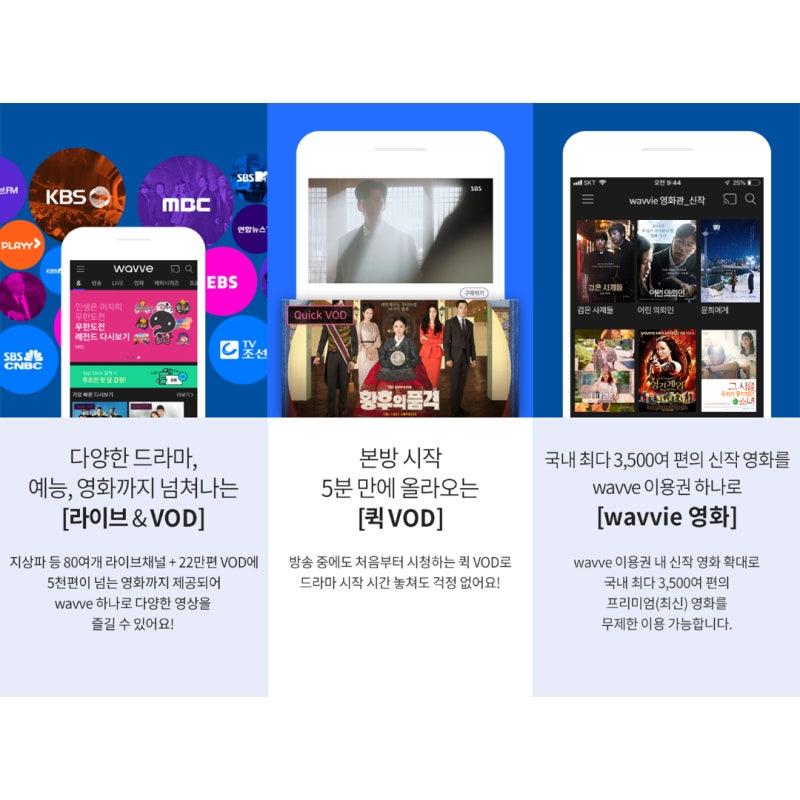
A KBS episode page, for example, can distinguish among a short preview, a full-VOD route through Wavve, a later free-VOD window, and a notice that a particular video cannot be provided because of rights issues. This shows why the viewer must check the exact episode and service rather than relying on the program’s general availability.
When contacting support, provide enough detail to avoid a generic answer:
Is episode 12 of this program, originally broadcast on [date], available as full VOD on any official service? If not, is the online release delayed or currently unavailable because of distribution conditions?
The provider may not disclose the underlying contract, but it may still confirm whether a VOD is planned, offered elsewhere, or unavailable for the current service period.
Each Availability Status Points to a Different Legal Viewing Route
The next step depends on what the official pages show.
| What You Find | Practical Next Step |
|---|---|
| Full VOD on the broadcaster’s site | Check login, payment, expiration, and device conditions |
| Full VOD linked to another OTT | Open the linked service and confirm the exact episode and subscription requirement |
| “Coming soon” or a release date | Wait until the stated date and recheck the episode page |
| Copyright-unavailable notice | Check other licensed services and ask official support whether another version exists |
| Clips only | Treat them as clips; do not assume a full replay is available |
| TV rerun only | Use the official schedule to find the next broadcast while continuing to monitor VOD notices |
| No official listing anywhere | Save the title and episode details and check future broadcaster or distributor announcements |
Avoid unofficial upload sites simply because the broadcaster does not offer VOD. A missing official replay does not make an unauthorized copy legal or safe.
The most reliable process is:
Confirm the exact episode → separate TV, live online, catch-up, and full-VOD availability → check licensed Korean platforms → ask the responsible provider when the status remains unclear.
A rebroadcast proves only that the program can be aired under the current television arrangement. Online access must be confirmed independently for the exact episode, platform, territory, and service period.


